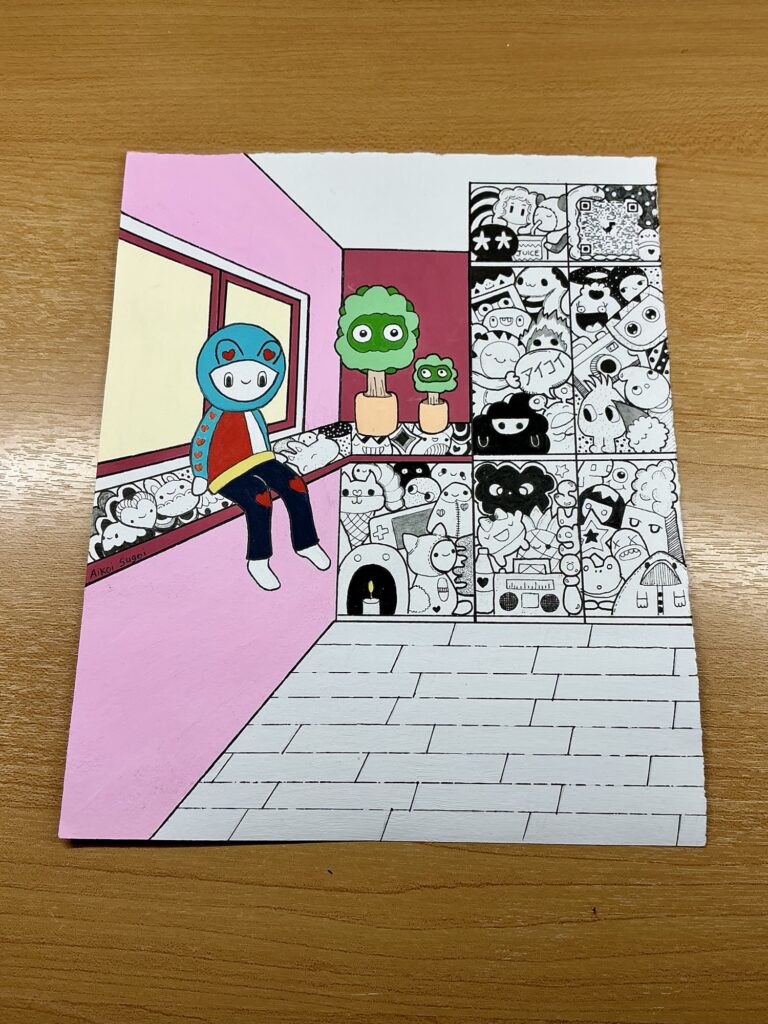
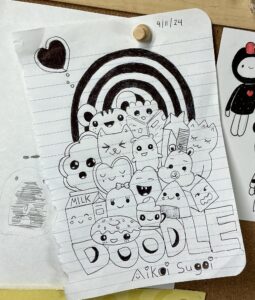
I can’t believe it has been one year since I started my hobby art journey! When I say that writing this post is blowing my mind I am not exaggerating. So many times in my life I have started a project and abandoned it within months. Sometimes within weeks. When I started this journey, I came in with no hopes and no goals because I knew my history was to burn out as suddenly as I start. But here I am, one year later – one year after launching my blog and 15 months after drawing my first doodle in a boring work meeting – I am still going. I cannot believe it. Even the differences between my first doodle in September 2024 and my newest mini doodle finished just this afternoon is unbelievable.
And what’s crazy amazing is that I still feel the same way I did when I first started. I’m still excited to work on a new piece. I still get up everyday with art on my mind. I still can’t wait to sit down and bring an idea to life. I actually have hope now that this could be something I could stick with for a long time. I think I can even make it to a second year anniversary. I’m shaking my head in wonderment just writing that sentence.
They say as you get older you get set in your own ways. You become the proverbial dog that you can’t teach new tricks. I thought that was true for me too. It’s too late for me, I thought. What’s the point, I said. Who cares about some old middle-aged woman making art? That’s not how I see myself in my head, but I know that’s how the world sees me. You stop mattering when you get old. It can be very demoralizing.
Even though the only thing I want from art is its enjoyment, I still want to feel like doing it is worthwhile. I’m not looking to blow up or go viral or anything like that. I just want to hold my art and feel good about it. I want be able to hang it on my own walls someday, and maybe one day to feel encouraged enough to meet other artists in the real world. Share my work with them. Maybe make a friend or two.
But enough rambling. Let’s get into the post, which is a reflection of what I have learned over the last year of my art journey. It’s not everything, but it’s some of the more important lessons. By the way, if you’re reading this, thanks for stopping by. I don’t know if anyone reads my blog. I refuse to install any analytics tracking so that I won’t dwell on it, but if you found this post, thanks for checking me out.
1. Buy the cheapest paint possible
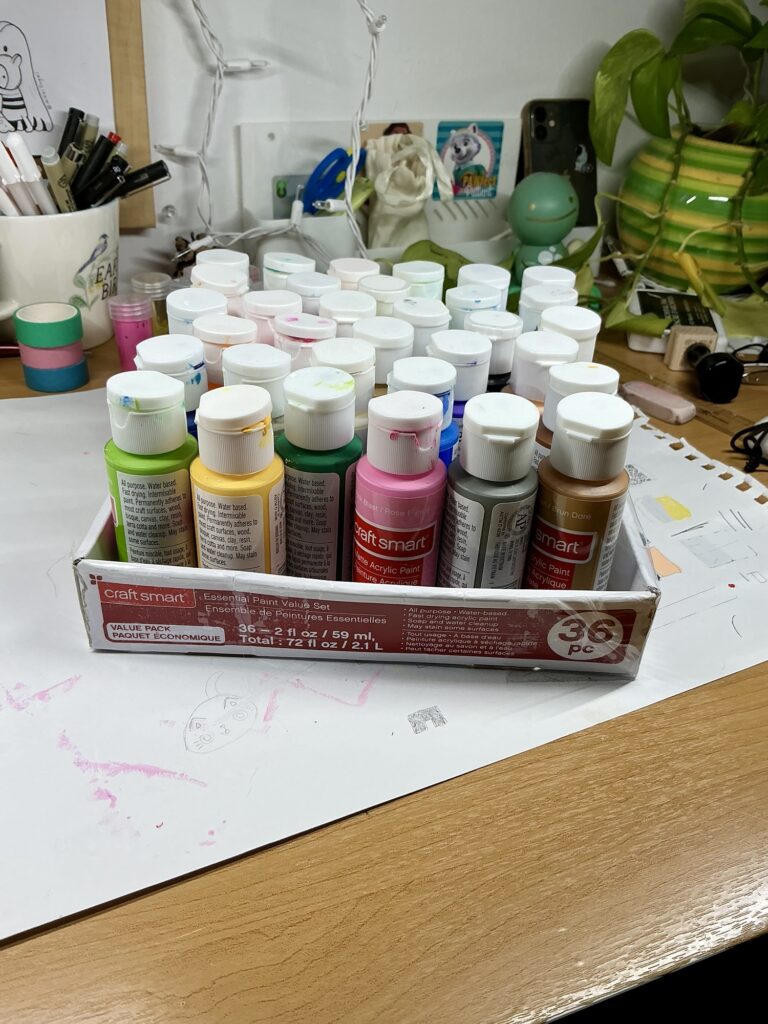
Buying cheap paint was the single best decision I made in my art journey. I started off with the Michael’s brand Craftsmart. I bought a set of 36 colors for just $13.99. I’m still using them to this day.
I did try other brands during my journey: Posca, Molotow, Golden, and Liquitex Basics. And while I was able to see the differences in quality, it wasn’t enough to make me feel that paying more for better quality paint was always worth it, especially Golden paint. It’s great paint, but holy sh!t, the price! I would have to be rich before I could ever justify using it exclusively.
Meanwhile, the Craftsmart paint does what I want it to do at a reasonable price. I would have continued to stick with Craftsmart, except my art progressed in a way that Craftsmart could no longer meet all of my needs. For example, I’ve realized over time I prefer opaque, matte paint. The more opaque the better. And Craftsmart doesn’t have a lot of opaque paints. In fact, I’ve had to throw away some colors because they were just too transparent.
I didn’t immediately recognize how much I prefer opaque paint until I ran into a problem with the color red. I found no matter what I did with the Craftsmart red, I could not get it to lay down opaque. It dried streaky, not solid the way I wanted.
So then I went looking for a paint brand that had really opaque paint. Of course, my first thought was Golden paint because again, I’m thinking more expensive equals better. I looked into the Golden SoFlat line because it fit exactly what I was looking for, but the price turned me off. I couldn’t stomach it.
One day I was browsing in Blick Art Materials, looking for a red with a price point I could tolerate, and decided to try Liquitex Basics. The label indicated that it was very opaque and the price was palatable. Turns out it was worth the purchase, because the color came out exactly the way I wanted. It was opaque as promised. I didn’t even have to mix it with a little white to solidify the color.
And just like that, I knew what paint brand I would upgrade to next. As my favorite Craftsmart colors run out, I plan to replace them with similar Liquitex Basics colors. I also like that Liquitex’s smallest affordable size is 4 ounces, which will allow me to experiment more with color mixing, which leads me to my next point.
2. Learn to mix colors
I remember scoffing at this tip when I first read it online. I simply didn’t see the point. It seemed easier to buy lots of colors and go from there. Why mix and waste paint when you could simply buy the exact color?
But gradually and naturally, I found myself mixing paint all the time. After all, I only have 36 colors in my Craftsmart set. Sometimes I wanted colors unavailable in my set, like when I found a color palette I wanted to try.
So I started mixing to get what I wanted and discovered it’s just the better way to go. I have created so many nice colors when I mix versus using the standard colors that I own. And while people looking at my art may not see much of a difference, I can.
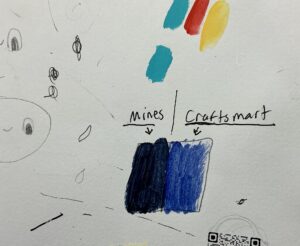
For example, with my recent mini painting, I wanted to give my character blue jeans. But not just basic navy blue jeans. I wanted dark wash blue jeans. I own a bottle of navy Craftsmart paint, but this time I decided to mix a darker navy because the Craftsmart version wasn’t meeting my expectations. And it came out great. Compared to the Craftsmart navy, I think my navy mix matched so much better with the rest of the colors on my character.
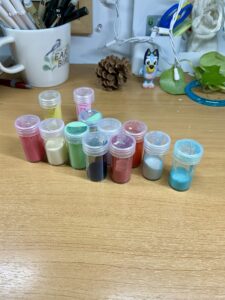
And mixing colors also allows me to build my personal collection of custom colors. I actually save some of my colors to use in future pieces. I keep them in small jars that I originally bought to store diamonds from my brief diamond painting hobby.
This is also another reason why I don’t think expensive paint is right for me. Now that I am mixing more colors, using an expensive paint would cost a lot of money. The truth is I don’t always get my mixes right. I’m not a professional artist after all, so I don’t yet have the skills to get my colors right on the first few tries. This means I waste a lot of paint when I have to start over. With cheaper paint, I can afford to keep experimenting. Expensive paint would make me not want to mix anything in the first place.
3. Study art dissimilar to your own
When I first started my journey, I spent a lot of time looking at art that was similar to mine. After all, what better way to learn how to do what I do? But over time, I naturally found myself studying work unlike my own.
On Instagram, for example, more than half of the accounts I follow are artists whose art is nothing like my own. I find I learn just as much from studying their art as I do studying art similar to my own. Sometimes I even find elements in their pieces that I can use in my own pieces.
It’s also nice discovering that a lot of successful artists do the same. I’ve been spending some time reading the biographies of artists who I admire and follow, and it’s amazing to discover that so many unrelated art things inspire them and reflect in their work. The same is true for me. While I’m not interested in making more traditional art like portraits or landscapes, I still love these art styles, and in turn my love for these styles is sometimes reflected in my own style, even if very subtly.
4. Don’t always listen to the internet
Title says it all, and I cannot stress this enough. When starting to learn something new, it is very easy to get led astray, to be told half-truths and outright lies. You never know who’s on the other side of the screen. You never know what their motivation is for giving the advice that they give.
I have read so much bad advice. Advice I didn’t even realize was bad until I had struggled my way through it. Probably the worst advice I have seen is that it is always better to use expensive paint, which is simply not true.
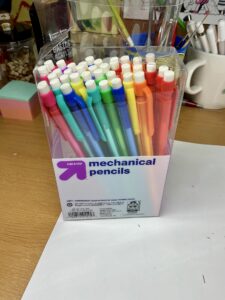
The same is also true for other art tools, like pencils. I bought a set of 50 Target brand mechanical pencils to use in my sketches, and they have been working perfectly for me. I have never felt the need to buy more expensive pencils, despite the fact they are often more recommended than any other type.
Pro tip: Reddit is notorious for recommending more expensive products, especially when it comes to art or tech. Read advice there at your own risk!
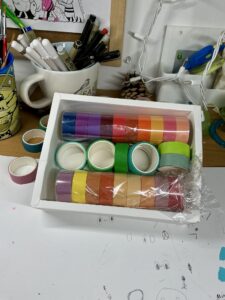
One bad piece of advice I got on Reddit was regarding tape. I often found myself admiring the clean lines in paintings from other artists and wondering how I could do the same in my own art. It was on Reddit that I often found advice to use painter’s tape. Many ruined drawings later, I threw out that tape. It was only when watching videos of watercolor artists that I discovered washi tape. Before those videos, I thought washi tape was only for journaling and decoration. After those videos, I discovered that washi tape was a must in my art toolbox.
So please, always take advice you get on the internet with a healthy sense of skepticism.
5. You don’t have to draw every day
This is another piece of advice I found commonly on the internet. Not just on Reddit, but also on YouTube. When I first heard this advice it was a bit discouraging because as you know, I simply don’t have the time to draw every day. I work a full-time job and I’m a single parent. I’m lucky if I get to relax on the couch one day of the week.
But I found this advice is simply not true, at least for me. I have gone weeks where I can only draw maybe once or twice a week and yet I have found myself getting better. In fact, I think not being able to draw or paint every day has been very beneficial to me because it has prevented burnout.
When I first started my journey, I tried to stick to this every day schedule. Sometimes I was so anxious to finish a piece that I found myself rushing through it and in doing so, I got lazy. I cut corners and my work suffered for it.
But then I started to make myself stop when I started to get that anxious feeling. Even when I have plenty of time to continue doing art, I will sometimes force myself to stop if I’m hitting a wall or if I’m getting that feeling that I just want to get it done even if it means cutting corners. I don’t want to rush to finish a piece for an audience that isn’t there.
So I stop myself. I walk away. And when I come back the next day or a few days later I do better. I have lots of ideas. My mind feels fresh and I attack my art with a new exuberance. Learning to stop is one of the best skills I have learned on this journey.
But even on days when I can’t sit down to do art I am still learning about art, whether that’s looking at the work of others, or watching YouTube art videos, or just thinking about my art. I think a lot about my art a lot. It’s every day. It’s never off my mind. It’s amazing.
6. Keep it (art) to yourself (if possible)
One year later and no one in my life knows about my art journey. I’m not kidding. Other than my daughter, no one outside of our home knows about my art. They don’t know about my blog. They don’t know about my Instagram. They know nothing and I plan to keep it that way for as long as possible.
My reasons are still the same. I don’t want opinions. I don’t want false praise. I’m not looking for an audience from them. I love them, but I don’t want them in my business right now. I’m more comfortable with strangers looking at my work than I am with the people I’ve known all my life.
I learned about a concept years ago called “move in silence.” It’s the idea that when you’re doing something big — whether buying a house or trying to get a new job — do it in silence because sometimes the unsolicited opinions you get from your loved ones are the very ones that can throw you off course. I have used that advice in every part of my life since. By moving in silence I am able to accomplish what I want without any opinions from others, whether they are positive or negative.
The problem with looking for positive opinions is that you will always run the risk of receiving negative ones. I’m not looking for anyone in my personal life to tell me my art is good or bad. It’s just something I want to do. I don’t need praise or critique from any of them. I don’t need acceptance or scorn.
Too often online I see many small artists get upset when their family and friends are not liking their art posts or giving positive comments. They don’t understand that their family and friends have opinions about art just as they do, and there’s a good chance they simply don’t like their art. They also don’t understand that no one wants to feel obligated to like everything that someone posts. It’s exhausting! I don’t even like everything that artists I follow post. Maybe the piece didn’t move me. Or maybe I was just too busy to immediately hop online to see their latest post. It’s nothing personal. It’s just the way it is.
But a lot of artists don’t see it that way. I don’t want anyone in my life to feel obligated to support me. But I’m human and I know that if my family and friends knew about my art, a part of me would want to hear what they have to say, even while dreading what they have to say. I would say I don’t care that they don’t like or comment on my art, even while wondering why they didn’t like or comment on my art.
It’s just human nature. We’re always wanting recognition even when we say we don’t. And when people are close to us, we want their support. But with anonymous netizens, at least for me, it’s different. A stranger not liking or commenting on my art makes me feel nothing because I don’t know them personally, so I don’t take it personally. I can’t say the same for those I know personally.
I don’t know if I’ll ever tell them. They may just find out on their own in some random way. Or maybe I may have a reason to tell them. My daughter may even tell them. But for now, I can say that not telling them has been hugely beneficial to my journey. I feel free. Less stressed about who may see it and what they would say. And honestly, it’s nice having this little secret to myself, this little part of me that I don’t have to share or defend to anyone else…
………………………………………………………
And those are my big lessons learned this year. So few and yet so many more to go. I don’t have a witty way to close this. I’ll simply say Happy New Years. I hope 2026 is the year you make something you are proud of. Thanks for reading and happy doodling!